

| 01.08.2019
How to Fold a Menstrual Cup: 10 Techniques
- min -How do you fold a menstrual cup?
One of the problems menstrual cup users report most often is folding the cup correctly and getting it to open during insertion. Every woman’s reproductive anatomy is highly individual, so it is worth getting to know your own body to make finding the ideal way of inserting the cup easier. The menstrual cup sits in the vagina, and the vagina differs from one of us to the next in length, width, elasticity and angle. Most commonly the uterus is tilted forwards or backwards, the cervix sits low or high, and there are many other individual traits. That is exactly why it is worth testing several different ways of folding menstrual cups to find the one that suits your needs best. You may have to try many folding techniques before you finally settle on a favourite. Here are a few that will help you insert the cup correctly.
The C fold
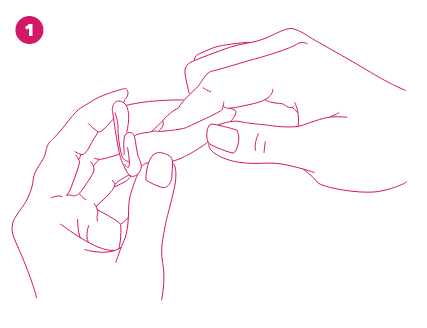
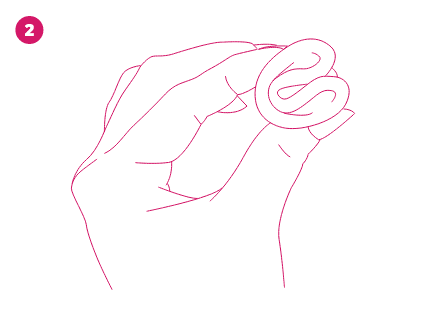
The C fold is best for beginners, because the cup opens immediately after insertion. Squeeze the cup at the top and then fold it in half lengthways. It is worth noting that although the C fold is one of the easiest, the width of the folded cup can make insertion harder for some women. Sometimes a uterus tilted forwards or backwards means you have to guide the cup with a finger so that it sits around the cervix or points exactly towards it.
The S fold
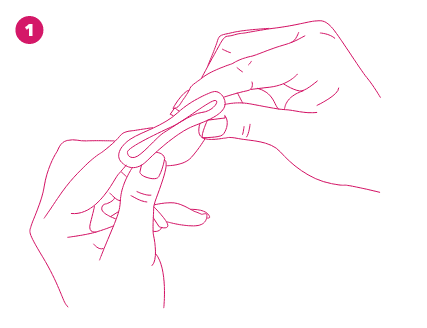
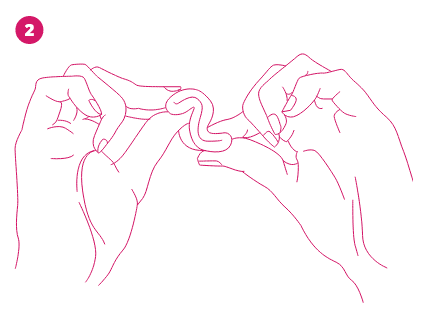
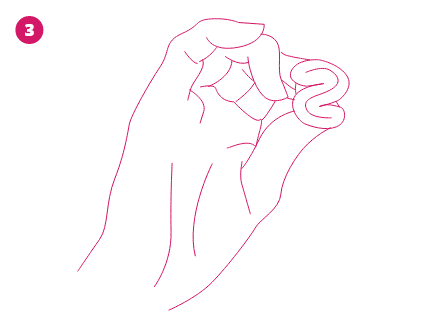
This is a small modification of the C fold. It works for women who find the cup folded into a C too wide.
Start by flattening the rim of the cup into a straight line, then use your thumb and index finger to press on one third of the cup, push in opposite directions and bring it together in the middle. That gives you the letter S.
The labia fold
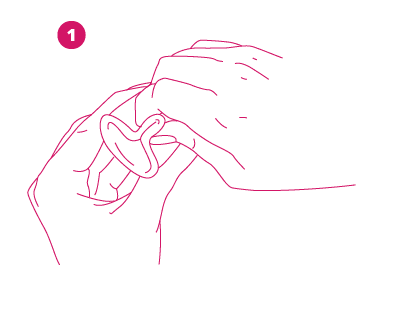
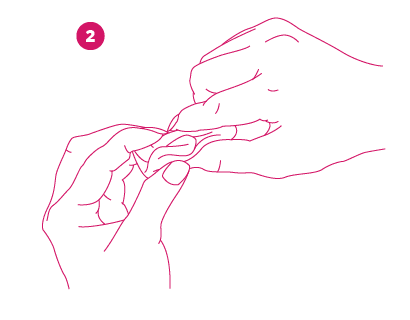
Once folded, the cup resembles the labia, which is where the name comes from. This fold opens instantly inside the vagina and is considerably narrower than the C and S folds. The downside is how hard the fold itself is, especially for beginners.
To fold the cup, squeeze its upper left side so that the edges touch. Keeping that grip, use your thumb to make a dip at the base of the cup. Push the folded part into that dip, then squeeze the creases that form on both sides. The smaller fold then sits inside the larger one.
The width of the folded cup makes it easier to insert, but holding the fold while you slide the cup into the vagina can be tricky.
The 7 fold
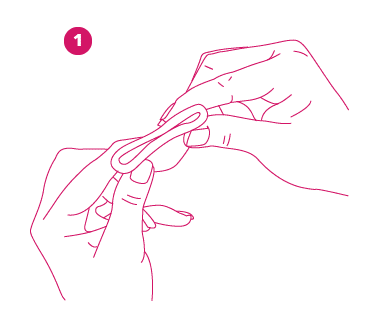
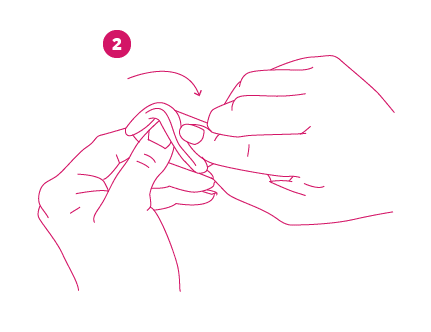
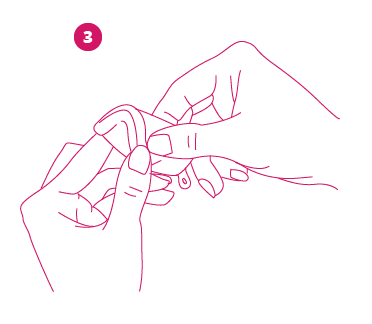
If you are struggling to fold the cup using the instructions above, this technique may be the one for you. The 7 fold is among the most widely used, and it is also easy to learn for women who are only just starting out with a menstrual cup.
Flatten the rim of the cup into a straight line, pull one corner down to half the length of the cup, then turn it over while still holding the fold. Fold the other corner the same way. From above the cup should look like two sevens joined together, and from the side like a tulip.
The punch down fold
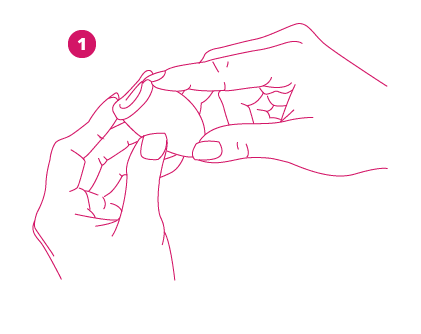
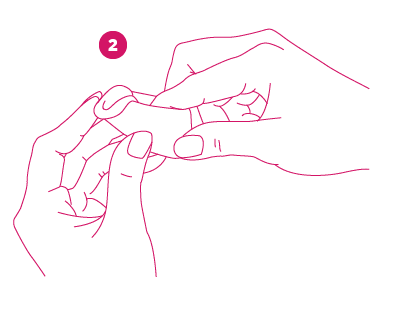
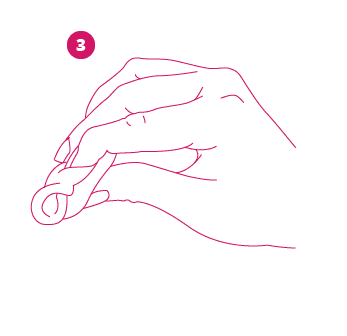
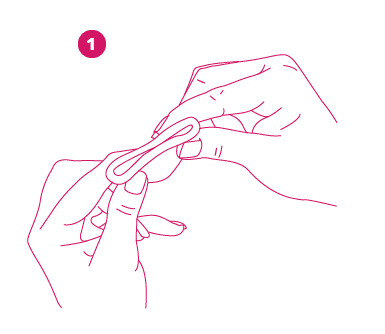
One of the most popular menstrual cup folds and one of the easiest to insert.
Using your thumb, push one edge of the cup inwards, towards its base. With your other hand, squeeze the edges that have not been pushed in and gently slide your thumb out. Insert the cup until you start to feel resistance, then release your grip. It should open straight away, and you can then use one finger to push the cup in further.
The tulip fold
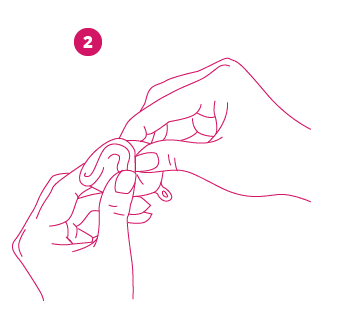
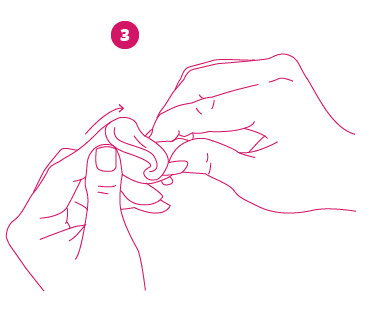
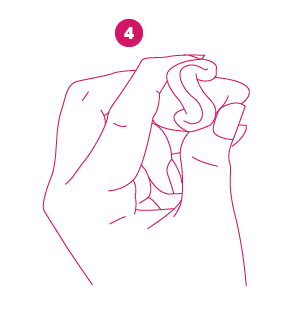
This is a small modification of the 7 fold, which is why it is also called the double seven.
If you have mastered all five of the cup folding techniques above, this one should not give you much trouble. You simply insert the cup and it opens inside the vagina straight away.
To fold the cup into a tulip, squeeze the rim together as you would for the 7 fold, then pull one corner of the cup towards the base. Stop halfway and hold it. Do the same on the other side of the cup and hold it in the middle.
The triangle fold
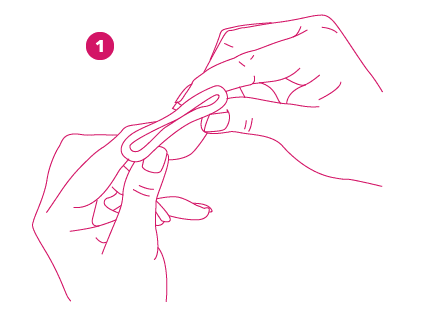
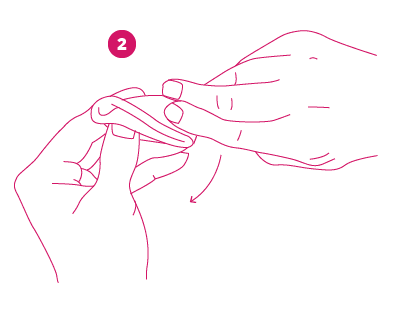
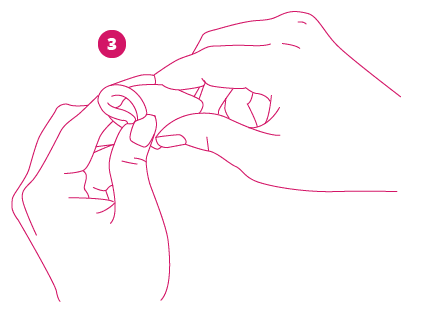
This is a very convenient and simple technique in which the ring is smaller than in the C fold and the cup opens more easily. Squeeze the cup so that its edges touch and pull one corner down towards the base. That gives you a triangle shape.
The origami fold
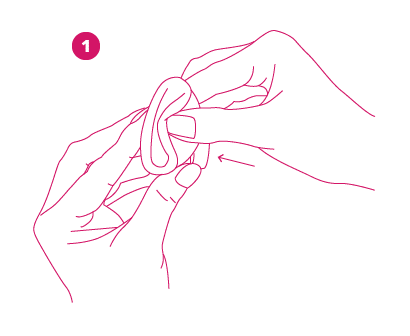
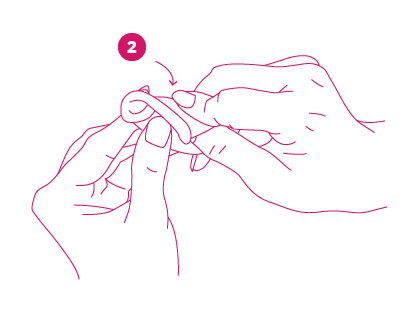
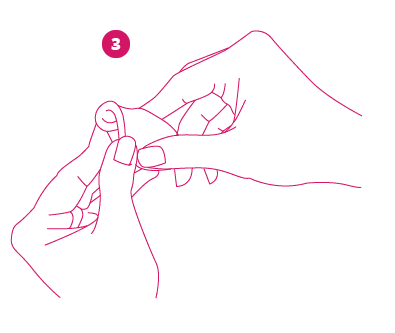
With this technique the cup has a small diameter and opens more easily. Push the front rim of the cup inwards at half its height. Then tilt one corner of the cup towards the base on the opposite side and hold it there.
The E fold
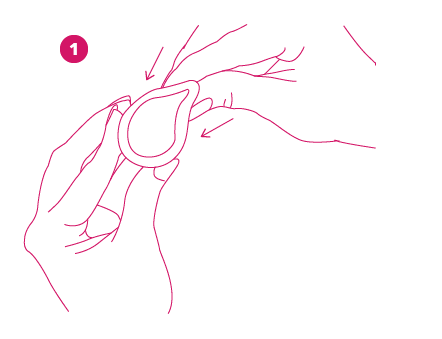
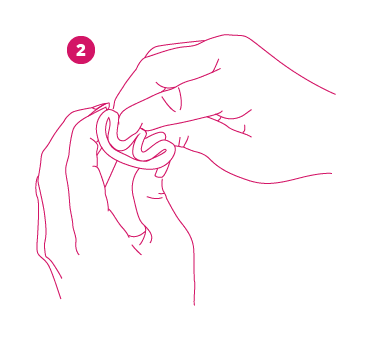
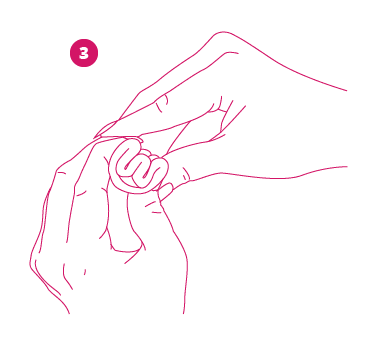
Squeeze the edges of the cup on one side so that they touch. Bring the opposite edge up to the squeezed one to make the shape of a letter T, then fold both arms of the T towards the squeezed side so that you get the letter E.
The diamond fold
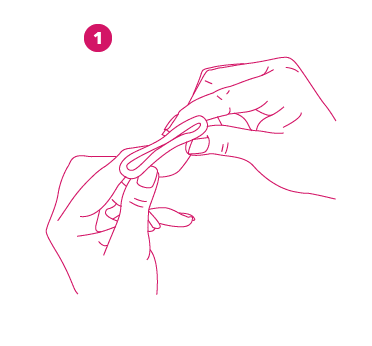
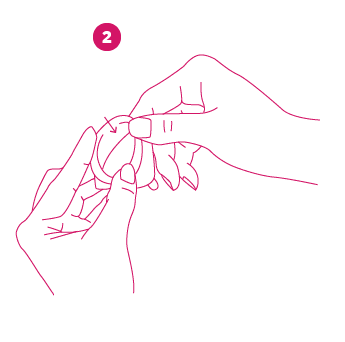
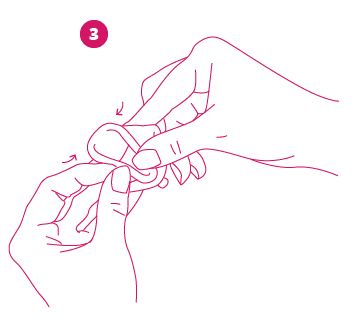
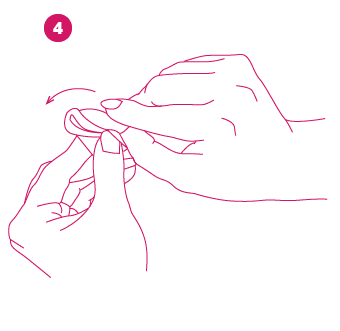
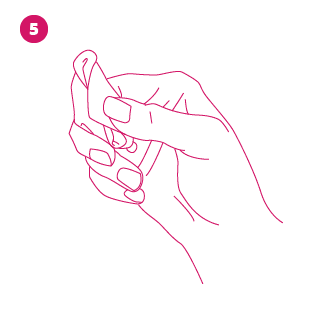
Squeeze the cup so that its edges touch. Point the front rim of the cup downwards, towards its base, and hold it. The top of the cup will now be oval. Press the left side of the oval towards the middle and, holding it, do the same on the right. The menstrual cup should now look like a diamond.
This fold sometimes causes trouble, but you can then try a simpler version, the half diamond. All you do is take the cup folded into a diamond and fold it in half across. The rim ends up on the inside, which makes insertion easier.
The first few cycles with a cup can be stressful, and there may be moments when using it feels hard. What matters is giving yourself time. Calmly try different folds to find the one that turns the cup into your best friend during your period and makes using it simple and comfortable.
What next: put the fold you have chosen into practice with our guide to inserting the cup. If the cup will not open fully, we describe the reasons in the article on why a menstrual cup leaks.
See also The Cup’s Things · Menstrual Cup Reviews

Najnowsze Wpisy


Frequently Asked Questions
-
1.
When should I consult using menstrual cup with a doctor?
-
· If you use IUD/IUS (in some cases it may be dislodged while using menstrual cup).
· If you have pelvic organ prolapse (POP).
· When your pelvic floor muscles are very weak and when you suffer from urinary.
· If you have, or suspect you have, a gyneacological condition consult your doctor before you use Perfect Cup (cervical ectroption, defects in body structure, cervical cancer, if you had TSS incident, if you have a lot of stitches after natural childbirth). · If you are a virgin – there are no contraindications for use menstrual cup by virgins, but this is delicate issue, so we recommend consultation with your doctor.
-
2.
Can menstrual cup get lost inside me?
- A menstrual cup cannot pass through cervix, so it cannot get lost inside you. Some woman has a long vagina, so you should be careful not to insert your cup as high as tampon. If you cannot reach the stem, relax, breath slowly and squat, because when squatting it is easier to get your cup’s stem. To ease your Perfect Cup keep gently downward pushing, a sequence of 10-15 slow and gentle pushing will release your cup and it will be pushed lower, so you can reach it and remove. The other tip is, you can put some string (like tampon string) to the stem to make you feel more comfortable.
-
3.
Do you need to wear a reusable pad with menstrual cup as an additional protection when I start using Perfect Cup?
- You can use reusable pad at the begging of using menstrual cup, but when you insert it properly there is no need to use any pad while using Perfect Cup.
-
4.
Do you need two menstrual cups?
- No. You don’t need two cups, but it is more convenient and more hygienic to have two.
-
5.
Are there any menstrual cup’s disadvantages?
- No. The only thing is silicone’s discoloration but it does not reduce its effectiveness. You can prevent discoloration through rinsing it with cold water first when emptying. From time to time you can put the cup into a hot water with salt, citric acid, soda bicarbonate or vinegar (choose one of it) to refresh your cup.
-
6.
How often should you empty menstrual cup?
- The frequency of emptying the cup depends on how heavy your menstruation flow is. In the beginning it is recommended to empty the cup as frequently as you used to change your pads or tampons. On average you should empty the Perfect Cup every 4-8 hours. The maximum time for continuous usage is 12 hours. It isn’t recommended to keep the cup too long in the vagina without emptying it, since it may increase the risk of bacterial growth.
-
7.
How to clean and care about menstrual cup?
-
Before the first use sterilize your Perfect Cup to be sure it is fully hygienic. Cover your menstrual cup with hot water and boil it for 5-10 minutes. After menstruation, clean and sterilize your Perfect Cup in the same way.
During the period you just need to wash it thoroughly with clean water after each emptying.
-
8.
When should you replace your menstrual cup?
- A menstrual cup is made from high-quality materials such as medical-grade silicone, latex or thermoplastic elastomer, which lets it last for years. It is recommended to replace the cup every 2-5 years, although some last up to 10 years. Replace yours if you notice cracks, damage, changes in shape, or if it starts to feel uncomfortable.
-
9.
Is a menstrual cup safe?
- Yes, a menstrual cup is safe when used according to the manufacturer's instructions and with proper hygiene. The cup is made from biocompatible and hypoallergenic materials. There is, however, a small risk linked to toxic shock syndrome (TSS), which is why it matters to keep the cup clean and to empty it regularly.
-
10.
How to store your menstrual cup?
- There is a cotton pouch included with your Perfect Cup to store your cup between periods. Do not use any hermetic boxes or anything with no air access. It may cause bacterial growth on your cup.
-
11.
Can a menstrual cup fall out?
- Correctly inserted menstrual cup should not fall out. Your vaginal muscles keep it in a place, so it should not fall out.
-
12.
Can you use a menstrual cup overnight?
night? - Yes! You can safely use your Perfect Cup menstrual cup overnight. It can be worn up to 12 hours at a time.
-
13.
Can you exercise when using Perfect Cup?
- Yes, you can! You can swim, dance, run and do any other form of exercises.
-
14.
Why menstrual cups are better than pads and tampons?
- Perfect Cup is produced of high-grade medical silicone Silpuran. Unlike traditional hygiene products, Perfect Cup menstrual cup does not irritate the vaginal mucosa or cause any dryness. Perfect Cup is free of any potentially harmful chemicals, BPA, latex and therefore completely safe. Perfect Cup menstrual cup hold your menstrual fluid 4-6 times more than a single tampon or pad. Therefore, despite your activity or time, you can wear your Perfect Cup up to 12 h at a time. Correctly inserted Perfect Cup fully adapts to your body. It is so comfortable that you will not feel wearing it. Once purchased Perfect Cup will last for 5-10 years, so it reduces monthly expenses for traditional hygiene products and contribute to reducing production of monthly hygiene waste.
-
15.
The smell of menstrual cup
-
The Perfect Cup menstrual cup is made of the highest grade quality medical silicone Silpuran from the German company Wacker. This silicone is odorless, but it may absorb smells from air and liquids. This may cause that the menstrual cup will have an undesirable smell of cosmetics, chemical cleaning products, packaging, production processes and storage as well as resulting from use. Removing the smell requires cooking for about 20 minutes. If the smell remains, repeat the action until the desired effect is obtained. You can put a cup in a solution with vinegar or salt. It will also help in case there is a discoloration resulting from use.
A cup with an aroma can be used using the hygiene measures as described in the manual instructions.
-
16.
How does a menstrual cup work?
- A menstrual cup is a small, flexible container that is inserted into the vagina to collect menstrual blood. It is designed for repeated use. The cup sits low in the vagina, where it forms a vacuum seal that keeps the fluid inside and prevents leaks.
-
17.
How do you remove a menstrual cup?
- To remove a menstrual cup, first wash your hands thoroughly. Then get into a comfortable position, for example squatting or standing with one leg raised. Insert your fingers into the vagina and locate the cup. Take hold of its base or ring, squeeze gently to release the vacuum seal, then carefully pull the cup out. Empty it, wash it with clean water and a mild soap, and you can insert it again.
-
18.
What should you do if the cup starts to leak?
-
If your menstrual cup starts to leak, there are a few steps you can take to solve the problem:
- Make sure the cup is placed correctly: the cup should sit low in the vagina and the vacuum seal should form properly. Check that the cup has opened fully and is not folded.
- Check the size and shape of the cup: the wrong size or shape can cause leaks. Choose the size and shape that suit your body and your needs.
- Empty the cup more often: if the leaks come from the cup being full, empty it more frequently, especially on heavy days.
- Try other folding techniques: different folds can help you get a better seal. Try several methods to find the one that works best for you.
- Check the condition of the cup: if it is damaged, cracked or deformed, replace it with a new one.
- Use extra protection: on heavy days, or whenever you are unsure about the seal, you can use extra protection such as panty liners or menstrual pads.
If the leaking continues, consult a doctor or a health professional to check whether any health issue is affecting how the cup works.
This site is only an information about menstrual cups and it’s usage. Any doubt regarding the usage of the Perfect Cup should be consulted with a doctor or other professional medical specialist.


